
While many schools list the International Baccalaureate on their curriculum page, the real difference lies in how consistently and rigorously the IB philosophy is applied inside classrooms. Parents evaluating IB curriculum schools in Bangalore often discover that the learning experience can vary widely between institutions.
At Indus, the IB curriculum is delivered through a clearly structured academic framework, supported by trained educators and predictable classroom practices. Inquiry-based learning is not treated as an abstract idea, but as a daily instructional method where students are guided to question, analyse, and apply concepts across subjects.
This ensures that IB learning is deep and sustained, rather than episodic or activity-driven.

One of the most important yet overlooked factors in IB education is classroom structure.
Class size and teacher access
At Indus, manageable class sizes allow teachers to:
With average class sizes of 22–25 students, classrooms remain interactive and academically focused.
Younger learners benefit from a 25:2 student–teacher ratio in Grades 1–3, while Grades 3–12 maintain a 25:1 ratio, ensuring continuity of attention as academic expectations increase.
This structure supports the IB emphasis on reflection, dialogue, and personalised learning pathways.
A defining strength of the IB curriculum is its continuum approach, where learning skills develop progressively across years rather than resetting with each grade.
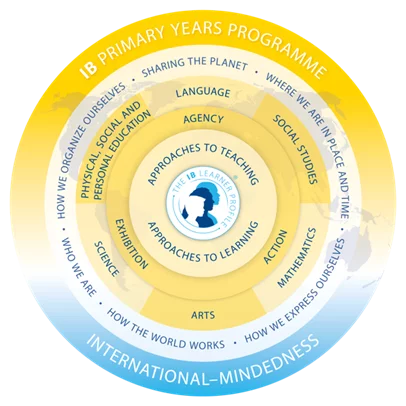
In the PYP, students build curiosity, communication skills, and foundational academic habits. Learning is thematic and inquiry-driven, helping students make connections between subjects and real-world contexts.
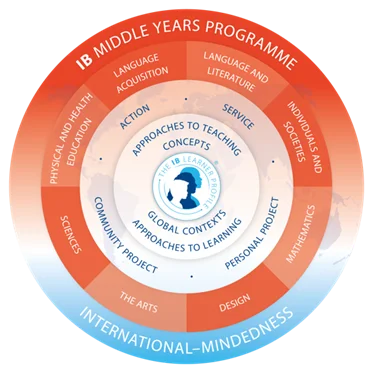
The MYP introduces greater academic depth and interdisciplinary learning. Students begin to take ownership of their learning, develop research skills, and apply concepts through structured projects and assessments.
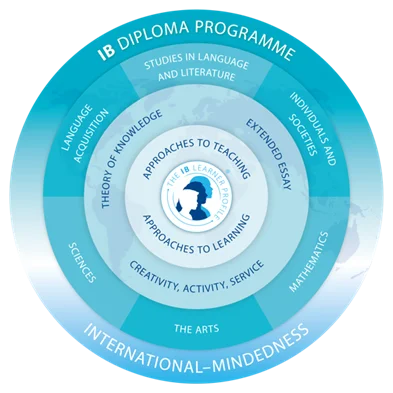
The DP demands academic discipline, independent research, and strong time management. Students are prepared for university-level expectations through subject depth, analytical writing, and reflective learning practices.
At Indus, these programmes are aligned to ensure students experience a coherent learning journey, not fragmented academic stages.
Reflection and responsibility
IB assessment encourages students to reflect on their work, identify strengths, and recognise areas for improvement. Over time, this builds academic maturity and self-regulation — skills that are essential for higher education.
Strong IB implementation depends on teacher preparedness and stability.
At Indus:
This emphasis on professional learning helps maintain consistency across grades and programmes, ensuring students experience IB as a cohesive system rather than a series of isolated classrooms.
IB education places high cognitive demands on students, making guidance and support essential.
At Indus:
This integrated support system ensures that students are challenged appropriately while remaining supported throughout their learning journey.
One of the primary reasons families choose IB curriculum schools in Bangalore is long-term readiness.
At Indus, students are supported in developing:
Alongside academics, students receive structured counselling support to explore higher education pathways in India and internationally, helping them make informed, realistic decisions about their future.
When comparing IB curriculum schools, parents may consider:
These factors together determine whether a school truly delivers the value of the IB curriculum.
Parents often discover that while many schools offer the IB curriculum, the quality of implementation varies significantly. The table below outlines practical differences that matter in daily learning.
How IB Curriculum Is Delivered: A Practical Comparison
| Aspect | Generic IB Curriculum Schools | Well-Implemented IB Schools | At Indus |
|---|---|---|---|
|
Curriculum Delivery |
Programme listed, uneven execution |
Structured but varies by grade |
Consistent IB continuum (PYP–MYP–DP)
|
|
Classroom Practice |
Activity-based, loosely guided |
Inquiry-led with structure |
Guided inquiry with academic rigour
|
|
Class Size |
28–35 students |
24–28 students |
22–25 students
|
|
Student–Teacher Ratio |
~30:1 |
~25:1 |
25:2 (G1–3), 25:1 (G3–12)
|
|
Teacher Preparation |
Basic IB exposure |
IB-trained faculty |
Continuous IB-focused professional development
|
|
Assessment Style |
Exam-heavy |
Balanced
|
Projects, reflection, feedback-driven assessment
|
|
Academic Guidance
|
Reactive support |
Periodic monitoring |
Ongoing academic + counselling support
|
|
Continuity Across Years |
Fragmented
|
Mostly aligned |
Coherent learning progression
|
Indus International School, Bangalore offers:
For families seeking IB curriculum schools in Bangalore that prioritise depth, clarity, and consistency, Indus provides a credible and thoughtfully implemented IB education experience.
An IB curriculum school follows the International Baccalaureate framework, which focuses on inquiry-based learning, conceptual understanding, research skills, and global perspectives rather than rote memorisation.
The IB curriculum emphasises inquiry, interdisciplinary learning, research, reflection, and application of knowledge. CBSE and ICSE are more syllabus-driven, while IB focuses on how students think and learn.
Yes. Students from IB curriculum schools pursue higher education both in India and abroad. The IB curriculum develops strong academic writing, research, and analytical skills that are relevant across systems.
Well-implemented IB schools provide continuous academic monitoring, teacher feedback, and structured guidance. At Indus, academic support is integrated into daily classroom and post-classroom practices.
Assessment includes projects, presentations, written assignments, and reflective tasks, alongside examinations. This balanced approach helps students understand their learning progress and build academic responsibility.
The IB curriculum suits students who benefit from guided inquiry, discussion-based learning, and structured independence. Strong academic and counselling support helps students adapt successfully.
Well-implemented IB schools provide continuous academic monitoring, teacher feedback, and structured guidance. At Indus, academic support is integrated into daily classroom and post-classroom practices.

White Swan Award

IB World School


Admissions:
Feedback:
Careers:
Principal:
Connect with us on:
Admissions:
Feedback:
Careers:
Principal: